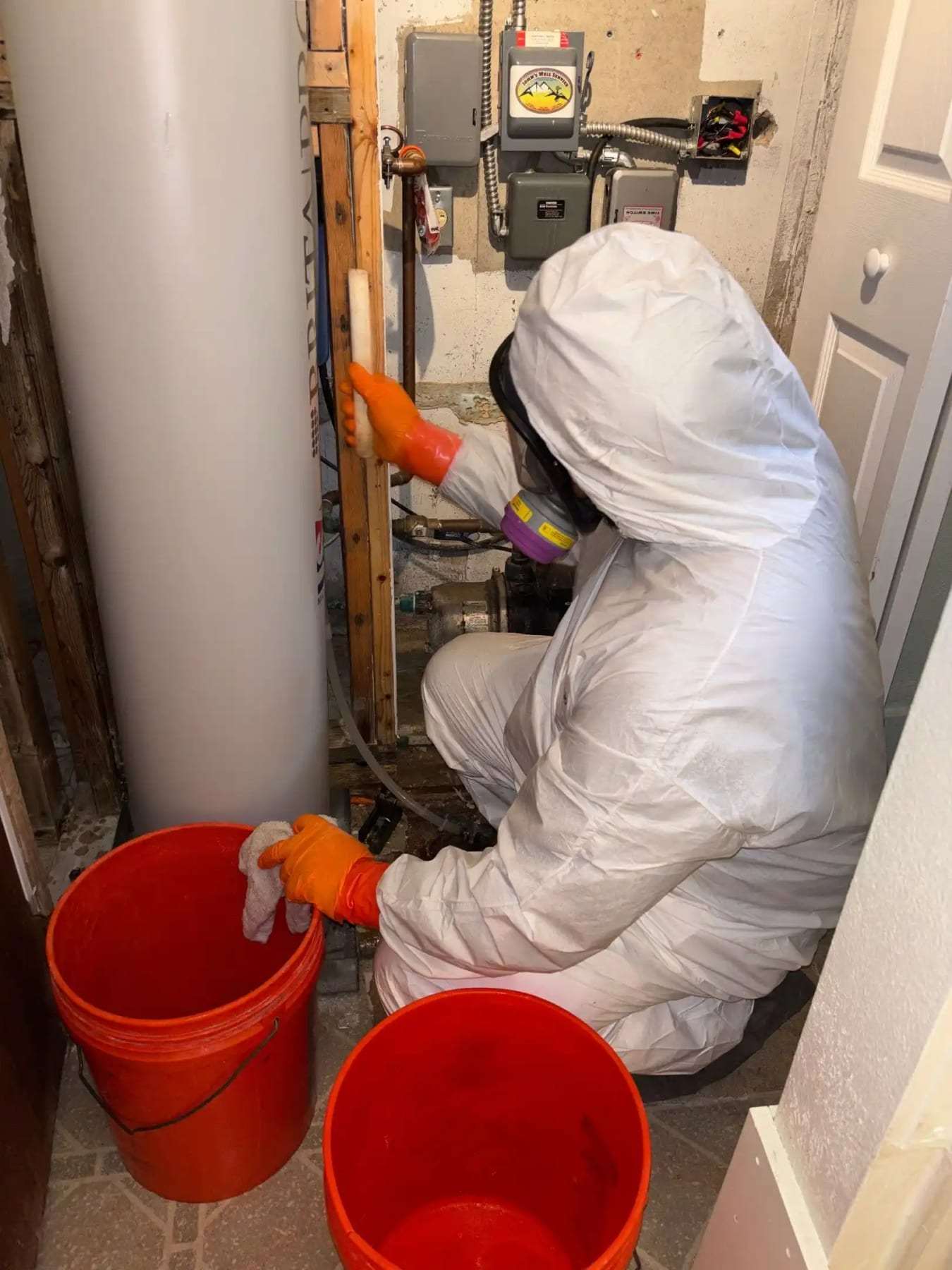
Technician in a protective suit beside a water heater with buckets. Illustrative image of the process; it does not document a job done for this site.
The first hour without heat
Check the simple causes
Thermostat batteries, the furnace switch, the breaker, and a clogged filter account for a surprising share of no-heat calls. A high-efficiency furnace can also shut down when its plastic vent pipe outside is blocked by snow or ice.
Call for service and ask about timing
During a cold snap heating contractors are busy. Ask for a realistic window so you can decide whether to plan for a long wait.
Close off what you can
Shut doors to unused rooms, keep the garage door down, and close blinds on north-facing windows at night.
Open cabinets and drip faucets
Let warm room air reach sink plumbing on outside walls, and keep a thin stream running at the faucets farthest from the main.
Watch the indoor temperature
A simple thermometer near the coldest exterior wall tells you how fast the house is losing heat.
If heat will not be back soon
How long a house holds heat depends on insulation, wind and outdoor temperature. These are the usual decision points.
- IfHeat is expected within a few hours and the house is still above about 50°FThenKeep dripping faucets, keep cabinets open, and use safe electric space heaters in the rooms with the most vulnerable plumbing.
- IfIndoor temperature keeps falling and repair is a day or more awayThenConsider shutting off the main and draining the system by opening the lowest faucet and then the highest ones, so there is little water left to freeze.
- IfYou drain the systemThenTurn off the water heater per its instructions before the tank loses water, and ask a plumber about toilets, traps and any boiler or radiant system.
- IfThe power is out across the neighborhoodThenReport the outage to the electric utility and follow the same timeline, remembering that a gas furnace still needs electricity to run its blower and controls.
After the heat comes back
Turn the water back on slowly and stay in the house while it refills. Walk through every room, look at ceilings below bathrooms and laundry rooms, and check the garage and basement. A line that froze while the heat was off will usually show itself soon after the house warms up.
If you drained the house, the plumbing will spit air at each faucet as it refills. Open each one until the flow is steady. Restart the water heater only after it is full again, following the manufacturer's directions. Keep the cabinet doors open for the rest of the cold stretch, since a recently chilled house can take a while to bring its exterior walls back up to temperature.
Common questions
Are electric space heaters safe for keeping pipes warm?
Used as directed, plugged directly into a wall outlet, and kept clear of anything that can burn, they are a common short-term measure. Do not leave them running in an empty house.
General information for Parker, not a quote or professional advice. In an emergency, call 911.