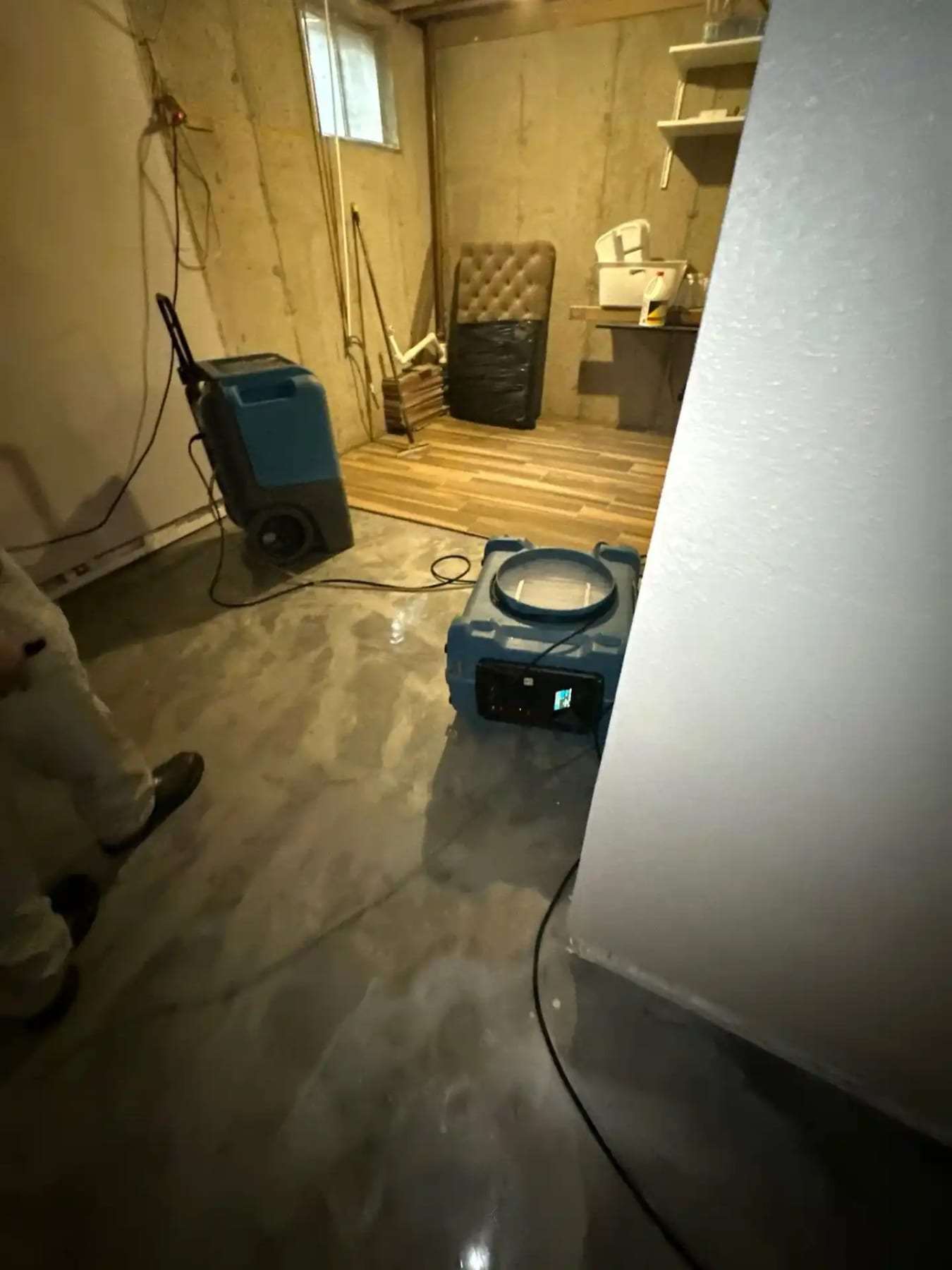
Basement with a dehumidifier and air mover on a wet concrete floor. Illustrative image of the process; it does not document a job done for this site.
Why insulation is usually the problem material
When a supply line splits inside an exterior wall, water runs down the inside of the cavity and soaks whatever insulation sits there. Fiberglass batts hold water against the framing and drywall and can slump to the bottom of the bay, leaving the top of the wall uninsulated. Blown cellulose in an attic floor or a dense-packed wall absorbs water like a sponge and becomes heavy, matted and slow to dry. Closed-cell spray foam, more common in newer or remodeled homes, sheds most water but can trap it between the foam and the framing.
The colder the cavity, the more insulation it tends to contain, which is why freeze breaks so often lead to insulation removal even when the drywall itself might have dried.
Insulation types and typical outcomes after clean-water wetting
| Insulation | How it reacts to water | Common outcome |
|---|---|---|
| Fiberglass batts | Holds water, sags, loses loft | Often removed from the wet portion of the cavity and replaced once framing is dry |
| Blown cellulose (attic floors, some walls) | Absorbs heavily, compacts, can stain the ceiling below | Wet areas usually removed; dry areas around it may stay |
| Mineral wool batts | Resists water better but can still hold some | Sometimes dried in place if wetting was brief |
| Closed-cell spray foam | Largely water-resistant | Often stays; the concern is water trapped behind or beside it |
| Rigid foam board | Does not absorb much; seams can hold water | Usually stays; check behind it for wet framing |
When removal makes sense
- IfWater ran inside the wall for many hours or daysThenExpect insulation removal in the wet bays so the framing can dry and be checked.
- IfOnly a small area was wet briefly and caught quicklyThenAsk whether targeted openings and drying can work without full removal.
- IfCeiling drywall is sagging under wet celluloseThenKeep everyone out from under it. The weight can bring the ceiling down without warning.
- IfThe water came through a drain line or was standing for daysThenIt may no longer be clean water, and porous insulation is generally replaced.
Questions for whoever is drying the house
- Which bays have wet insulation, and how did you confirm it?
- Will removed insulation be replaced with the same type and depth?
- How will the framing inside the opened walls be measured before closing?
- Is a vapor retarder or air barrier being disturbed, and will it be restored?
General information for Parker, not a quote or professional advice. In an emergency, call 911.